
How to Choose Surf Lodging That Fits

You feel the difference on day two. If your place is too far from the break, too expensive for the length of your stay, or set up for tourists instead of surfers, every session takes more effort than it should. That is why knowing how to choose surf lodging matters more than most first-time surf travelers expect.
Good surf lodging does not need to be fancy. It needs to support the way you actually travel. That usually means easy access to the beach, enough privacy to rest, a simple setup for meals and gear, clear communication, and a price that leaves room in the budget for the trip itself.
How to choose surf lodging without overpaying
A lot of travelers start with photos. That makes sense, but it is also where people get sidetracked. A bright pool, trendy decor, or a big terrace can look great online and still be the wrong fit if your real plan is to surf twice a day and spend very little time in the room.
Start with location. For a surf trip, the real luxury is not marble countertops. It is being close enough to the break that dawn patrol feels easy and a quick check of the conditions does not turn into a full transport plan. Walking distance can change the whole trip. You save time, avoid extra costs, and stay more flexible when the wind changes or a window opens up.
That said, close is not always the same as best. If you want nightlife, restaurants, and a busier social scene, you may want to stay in a more central area and accept a longer trip to the beach. If your priority is surf access and quieter evenings, a simpler apartment near the break often makes more sense. It depends on what kind of trip you are actually taking, not the one that looks best on Instagram.
Budget comes next, and this is where people often make a mistake. They compare nightly rates without thinking about the full cost of staying there. A cheaper room far from the beach can become more expensive once you add rides, extra meals out, and wasted time. A modest apartment with a kitchen or kitchenette can stretch your budget much further, especially on week-long or multi-week stays.
Look closely at what is included. Wi-Fi, air conditioning, parking, basic kitchen equipment, and cleaning arrangements all affect value. None of these are glamorous details, but they shape your daily routine. If you are coming back salty, tired, and hungry after a session, practical things matter more than design touches.
Match the lodging to your surf trip
The best answer to how to choose surf lodging depends on who is traveling and how long you are staying. A solo surfer usually needs something different from a couple or a small group.
If you are traveling solo, simplicity matters. You probably want a clean, efficient place that feels safe, keeps costs reasonable, and makes it easy to get in and out for sessions. Paying for extra space you will not use rarely makes sense unless you are working remotely or storing a lot of gear.
For couples, the balance shifts a little. One person may be surfing every morning while the other wants a comfortable base for reading, working, or exploring. In that case, an apartment-style stay often works better than a basic surf camp bunk or a cramped hotel room. You get more privacy and a setup that feels livable, not just functional.
For friends traveling together, sleeping arrangements become a bigger factor than many people expect. Make sure the layout actually works for your group, not just the headcount. A one-bedroom with a sofa bed can be a great budget option for some travelers and a bad fit for others. If everyone is on different schedules, a little extra space can prevent small annoyances from becoming daily friction.
Trip length matters too. For a weekend surf escape, you can put up with a few inconveniences. For ten days or two weeks, those same details start to wear on you. You will notice whether the room has enough storage, whether making breakfast is easy, and whether getting to the beach still feels convenient after multiple sessions.
What surfers should look for first
Surf travelers usually do best when they focus on function before amenities. The basics are not boring. They are what make a stay smooth.
The first thing to check is realistic beach access. Read carefully. Near the beach and walk to the beach are not the same thing. A short walk is usually a major advantage, especially in a place where surf conditions can change through the day.
Second, think about the kind of space that fits your routine. If you surf early, nap midday, and head back out later, you will want lodging that feels comfortable to return to between sessions. Apartment-style lodging tends to work well here because you can reset, cook something simple, and avoid turning every break between sessions into another expense.
Third, pay attention to communication. Independent surf travelers usually do better with lodging that gives clear answers fast. Before booking, ask yourself how easy it is to get details about the unit, payment, check-in, house information, and location. If communication is vague before you book, it usually does not improve later.
This matters even more in destinations where you may be arriving after a long travel day, dealing with a new SIM card, or coordinating transport. Clear, direct contact saves time and lowers stress. That is one reason many surfers prefer smaller, specialized lodging options over bigger properties with slower systems.
Avoid the most common booking mistakes
One common mistake is choosing based on price alone. Cheap can be good value, but only if it fits the trip. If the place makes every beach run harder, the savings disappear quickly.
Another mistake is booking a resort-style stay for a surf-focused trip. Resorts can be great if you want full-service comfort and plan to spend most of your time on property. But for many independent surfers, they come with extras you may not use and a location that is less connected to the actual surf routine.
There is also the opposite mistake - booking the absolute bare minimum without checking comfort at all. After a few days of sun, salt, and early mornings, a room that is too hot, too noisy, or too cramped can wear you down. Surf trips are active trips. Recovery matters.
People also underestimate the value of small operational details. Check-in times, payment clarity, cancellation terms, and unit-specific rules are not exciting, but they tell you a lot about whether a stay is organized. The smoother those basics are, the easier your trip usually feels.
Why apartment-style lodging often works well
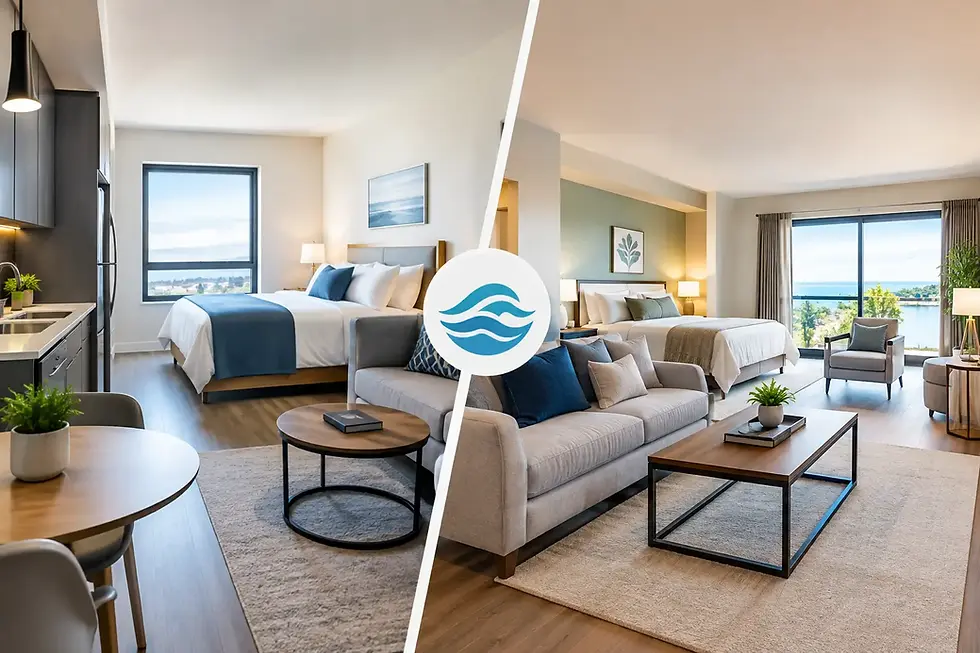
For many surf destinations, apartment-style lodging hits the right middle ground. It is more private than a hostel, usually more practical than a standard hotel room, and often more affordable than full-service properties when you look at the total trip cost.
That setup works especially well for surfers who want freedom. You can wake up early without dealing with hotel schedules, keep your meals simple, and settle into a routine that matches the waves instead of someone else’s timetable. In places like Playa Encuentro, where surf access is a major part of the stay decision, being in a small, purpose-driven rental near the break often makes more sense than paying for amenities you will barely use.
This is where specialized lodging stands out. A place built for surf travelers usually understands what guests actually need: practical layouts, straightforward booking info, direct communication, and a location that supports daily sessions. Waverider Apartments is a good example of that kind of stay - simple, close enough to keep the beach within easy reach, and set up for travelers who care more about surfing well than posing in a lobby.
The right choice should make the trip easier
The simplest way to choose well is to ask one question: will this place make my surf days easier or harder? If it helps you get to the water faster, spend less on unnecessary extras, rest properly, and manage your trip without confusion, you are probably looking at the right option.
Not every surfer wants the same stay, and that is the point. Some want the social side, some want privacy, some want the lowest possible nightly rate, and some want a little more comfort between sessions. The smart choice is not the fanciest one or the cheapest one. It is the one that fits your surf routine, your budget, and the kind of trip you actually want to have.
Pick the place that lets you think less about logistics and more about the next good window to paddle out.


Comments