
How to Find Walkable Surf Stays That Work

You feel the difference on day one. If your board is under your arm and the beach is a real walk away, the whole trip runs better. That is the core of how to find walkable surf stays - not just booking a place that looks close on a map, but choosing one that actually makes dawn patrol, mid-day breaks, and quick sunset sessions easy.
A lot of surf lodging gets marketed as “near the beach,” which can mean anything from a quick barefoot walk to a hot roadside trek with traffic, no shoulder, and a board bag bouncing off your leg. For surfers, walkable is not a vague bonus. It changes how often you surf, how much you spend on transport, and how much friction sits between you and the water.
What walkable really means for surfers
A walkable surf stay is not just about distance. It is about effort. Ten minutes on a quiet route with your board is very different from ten minutes across a highway or up a steep hill. The useful question is not “How far is it?” but “Would I want to do this twice a day with a surfboard, in flip-flops, when I am tired?”
That standard clears out a lot of bad options fast. A place can be affordable, clean, and well-reviewed, but if getting to the break means arranging rides every session, your trip becomes more expensive and less flexible. On the other hand, a simple apartment close to the beach can be the better surf setup even if it has fewer extras.
For most surfers, truly walkable usually means around 5 to 15 minutes on foot, depending on the route. Past that, it starts to depend on heat, road conditions, your board size, and how often you plan to surf each day. A solo traveler with a shortboard may tolerate more than a couple carrying longboards or a beginner hauling rental gear.
How to find walkable surf stays without guessing
The easiest mistake is trusting listing language. “Steps from the beach” and “short walk to surf” sound good, but they are not measurements. If you want a place that supports a surf-first trip, you need to verify the details.
Start with the map, but do not stop there. Look at the path from the property to the actual surf break, not just the shoreline. Some places sit near water but far from the usable entry point. A stay can be close to the coast and still be inconvenient if the break you plan to surf is on the other side of the bay or accessed from a different road.
Then check the route itself. Street view, satellite view, guest photos, and simple local questions all help. You are looking for things that matter in real life: paved or dirt road, traffic level, lighting, hills, shortcuts, and whether the walk makes sense with a board in hand. If the route looks awkward in photos, it usually feels worse in person.
The next step is asking direct questions before booking. Keep it simple. How long does it take to walk to the main surf break with a board? Is the route easy on foot? Do guests usually walk to surf every day, or do they take a car or motoconcho? Straight answers tell you a lot.
If the host gives a vague reply, that is useful information too. A surf-friendly stay should be able to explain the walk clearly because guests ask about it all the time.
The details that matter more than luxury
When surfers search for accommodation, it is easy to get distracted by pools, décor, or big balconies. Those things can be nice, but they do not fix a bad location. If your main goal is maximizing water time, the practical details matter more.
Board-friendly access is one of them. Think about whether you can leave for the beach quickly and come back without hassle. Ground-floor storage, easy entry, room to rinse off outside, and enough space to lean a board safely all matter more than designer furniture.
Kitchen access matters too, especially for longer stays or budget trips. If you are surfing early and often, being able to make coffee, breakfast, and simple meals saves both money and time. That is especially true in surf areas where beachside food can add up fast.
Noise and surroundings are part of the equation as well. A walkable stay works best when the area fits your actual routine. Some travelers want to be close to restaurants and nightlife. Others just want sleep, easy beach access, and a place to reset between sessions. Neither is wrong, but they are different trips.
Walkability depends on your surf plan
Not every surfer needs the exact same setup. If you are taking lessons once a day and spending the rest of the time exploring, a slightly longer walk may be fine. If you want to surf first light and again late afternoon, distance starts to matter a lot more.
This is where being honest about your habits helps. Many people picture an ambitious surf schedule, then realize they surf less when the logistics are annoying. Even a cheap ride to the beach becomes a reason to skip a session when the waves are only okay or when you are tired. A stay within easy walking distance removes that excuse.
For beginners, walkability can be even more valuable. Carrying a soft top, managing changing conditions, and working around lesson times is easier when your lodging is nearby. For intermediate and advanced surfers, a walkable stay gives more freedom to check conditions, surf when it turns on, and head back without planning transport.
Red flags to watch for
If a property description leans hard on “quiet area” or “great value” but stays fuzzy about beach access, pause and verify. Sometimes that means you are getting a better price because you are farther from the break than you think.
Another red flag is when a stay is marketed to general vacationers instead of surfers, but still claims surf convenience. That does not automatically make it a bad option. It just means the host may not understand what surfers mean by easy access. Five minutes by car is not the same as five minutes walking with a board.
Also pay attention to elevation and heat. A route that looks short online can feel longer when you are walking uphill in tropical sun after a two-hour session. This is one of those cases where “close” on paper and “easy” in practice are not the same thing.
Why apartment-style stays often make sense
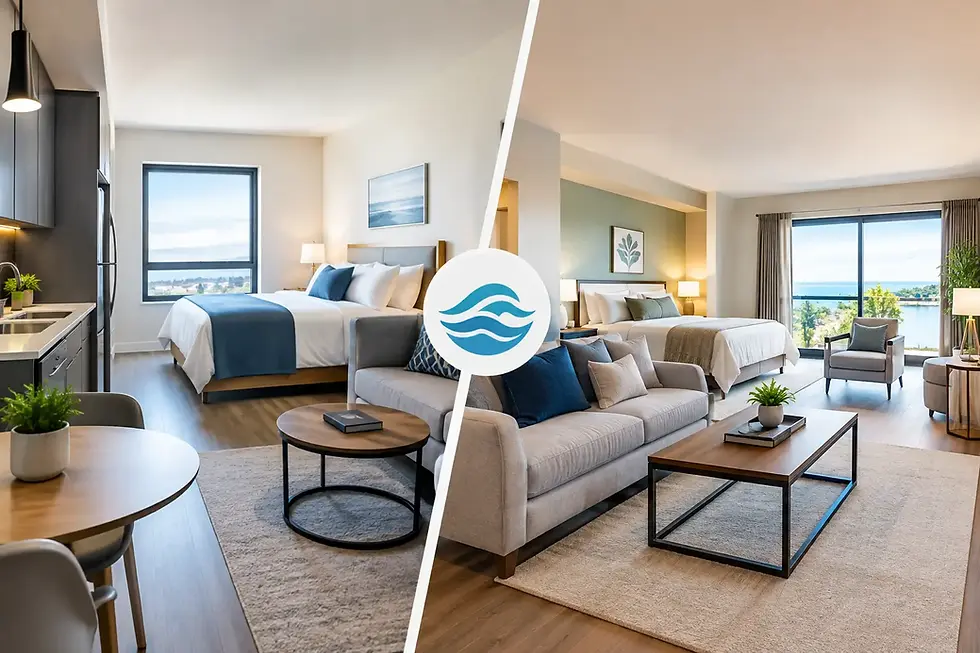
For surf travelers who care more about access than resort extras, apartment-style lodging often lands in the sweet spot. You get privacy, room for gear, and a more flexible routine. You can come back salty, eat when you want, and head out again without moving through a hotel lobby every time.
That setup also tends to work well for couples, friends, and longer stays. If the place is close enough to walk to the surf, having your own functional base can be more useful than paying for services you barely use.
In Playa Encuentro, for example, many surfers are not looking for a polished resort experience. They want a practical place near the beach, a simple booking process, and a location that supports daily surf without transport drama. That is a different value proposition, and for the right traveler, it is the better one.
A simple way to compare two stays
If you are choosing between multiple options, stop looking at the listing photos for a minute and compare the trip rhythm each place creates. Picture your normal surf day. Wake up, grab coffee, carry your board, surf, come back, eat, rest, go again. Which stay makes that routine easier?
That question usually reveals the better choice faster than a long amenity list. A place with fewer extras but a true walk to the break often beats a nicer place that adds transport, waiting, or extra planning to every session.
If you are looking in an area like Encuentro Beach, a stay built around that routine can make a real difference. Waverider Apartments, for example, keeps things simple: apartment-style lodging, direct communication, and practical surf access within walking distance of the beach. For surfers who care about ease and budget, that is often exactly the point.
The best surf stay is not the one with the fanciest listing. It is the one that gets you from your door to the lineup with the least hassle, so the trip feels like surfing instead of organizing.


Comments