
How to Stay Near Surf Without Overpaying

The difference between a good surf trip and an annoying one is usually not the board. It is the walk, the ride, the early-morning scramble, and the question you ask on day two: why did I book so far from the break? If you are figuring out how to stay near surf, the smart move is to think less about flashy extras and more about what actually affects your sessions.
For most surfers, staying near the beach is not about luxury. It is about consistency. When the waves are working, you want to paddle out fast. When conditions change, you want the freedom to check the break more than once a day without turning every session into a transport plan.
What how to stay near surf really means
A lot of travelers say they want to stay "close to the surf," but close can mean very different things. A map pin that looks nearby may still involve a rough road, no sidewalk, limited parking, or a long walk carrying a board in the heat. Real surf access is about usable distance, not just mileage.
That is why the first question is not, "How cheap is the room?" It is, "How easily can I surf from here every day?" If the answer depends on taxis, rented scooters, or good luck with parking, you are not really staying near surf. You are staying near the general area.
For many independent travelers, the sweet spot is simple lodging within walking distance of the break. Not beachfront at any cost, and not inland enough to complicate the day. Just close enough that dawn patrol, mid-morning checks, and sunset sessions all stay easy.
Pick access over amenities
When people book surf travel for the first time, they often compare places the same way they would compare a regular vacation hotel. Pool, breakfast, room service, big common areas. Those things can be nice, but they usually matter less than whether you can get from your room to the lineup without wasting time.
A practical apartment or studio near the beach often works better than a larger resort farther away. You get space to keep your gear, enough privacy to rest between sessions, and fewer moving parts in your day. If your trip is built around surfing, convenience beats extras most of the time.
This is especially true for budget-conscious travelers. Paying more for amenities you barely use can leave you spending less on the things that actually improve the trip, like a longer stay, better board setup, or the freedom to surf whenever conditions line up.
Walking distance changes the whole trip
If you want the simplest answer to how to stay near surf, here it is: stay somewhere you can reach the beach on foot without it feeling like a project.
That walking-distance range matters because surf conditions are not static. Wind shifts. Tide changes. Crowds build. A place that lets you check the break quickly gives you more control over the day. You can head out early, come back to recharge, then go again when it looks better.
In a surf area like Playa Encuentro, being about a 10-minute walk from the beach can be a very practical setup. You are close enough for daily sessions without paying the premium that often comes with being right on top of the shoreline. For a lot of surfers, that is the balance that makes sense.
There is also a lifestyle benefit. A short walk keeps the trip relaxed. You are not coordinating rides, loading gear every time, or wondering whether it is worth the hassle to go back for one more session. When surfing is easy to access, you usually surf more.
The best lodging setup for surfers
Not every place near the beach is built for surf travelers. Some properties are fine for a weekend getaway but awkward for people living out of board bags, rash guards, towels, and sandy backpacks.
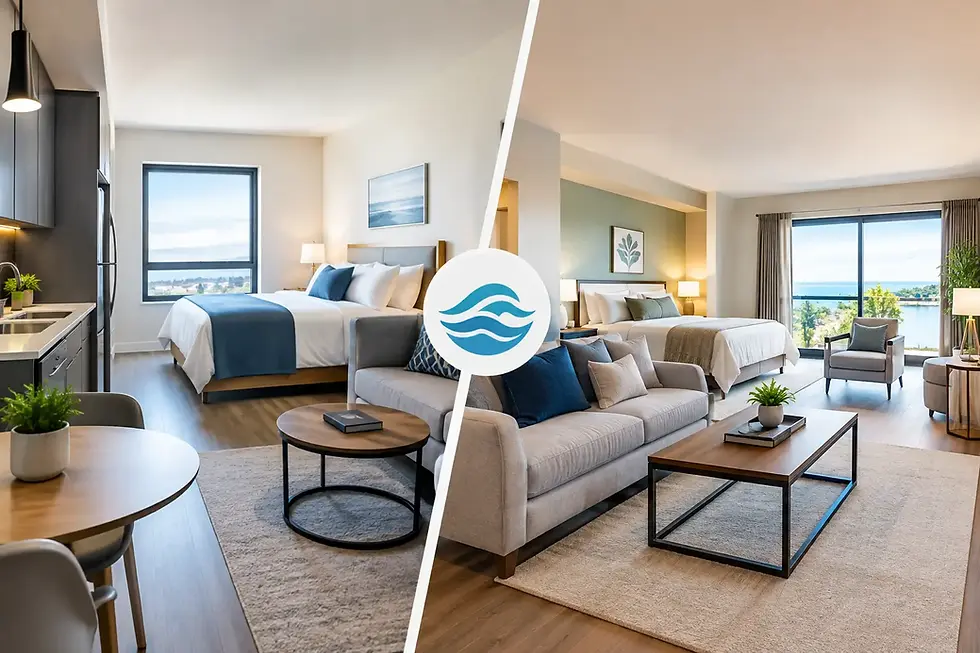
The best surf-friendly stays tend to be simple and functional. Apartment-style lodging is often a strong option because it gives you a little more control over your routine. You can spread out gear, store snacks and drinks, rinse off and reset, and keep your day flexible instead of being tied to hotel timing.
Studios work well for solo surfers and couples who want an affordable base. One-bedroom units make sense if you want a bit more room or are traveling with a friend. The key is not size for its own sake. It is whether the place supports the rhythm of a surf trip.
If you are comparing options, pay attention to the basics. How far is it really from the break? Is the area geared toward independent travelers? Is the setup straightforward? Can you get clear answers before booking? A smaller lodging operation that understands surf travel can be a better fit than a generic rental with prettier photos.
Budget trade-offs that actually matter
Trying to stay near surf always comes with trade-offs. The goal is not to find a perfect property with every feature. The goal is to spend on the things that affect your experience and save on the things that do not.
For example, paying slightly more to be close enough to walk can save money on daily transportation. It can also save time, which matters just as much on a short trip. On the other hand, paying a premium just to say you are beachfront may not deliver much extra value if a short walk gives you the same surf access.
This is where smaller, economy-focused accommodations often stand out. They are built for travelers who care more about location and practicality than polished resort extras. If your priorities are clean space, easy access, and a good base near the waves, that kind of stay usually makes more sense than overbooking for features you will not use.
Check the booking process before you commit
A surf trip gets easier when the accommodation is easy to deal with. This part gets overlooked, but it matters. If it is hard to get answers before booking, it may stay hard once you arrive.
Look for a place with direct communication and clear information. You should be able to understand the unit options, location, payment process, and basic stay details without chasing people around. Fast, direct contact is especially useful for surf travelers because plans can shift. Flights change, arrival times move, and sometimes people decide to extend a stay once the conditions line up.
This is one reason independent apartment operators can be a good match. You are often speaking directly with the people managing the stay, not going through layers of generic booking support. That can make the whole process feel more practical and less scripted.
Choose the area, not just the room
If you are deciding how to stay near surf, think at neighborhood level first and room level second. A nice room in the wrong area still creates friction. A simple room in the right area often works better.
That means looking at what your daily routine will actually be. Can you get to the beach quickly? Is the area connected to the surf scene you came for? Will it feel easy to live there for several days or a couple of weeks? Are you close enough to keep the trip focused on surfing instead of transportation?
In Cabarete, for example, surfers who want regular access to Encuentro usually benefit from staying specifically near that break rather than booking farther away and assuming it will all feel close once they arrive. Distance on paper is not the same as day-to-day convenience.
Who should prioritize staying near surf most
Not every traveler needs the same setup. If surfing is one activity among many, you may be fine staying farther out. But if the trip is built around daily sessions, access should move up your list fast.
Solo surfers usually benefit the most from staying close because it keeps the trip flexible and affordable. Couples often like apartment-style stays because they get privacy without paying resort rates. Small groups can also do well with practical lodging near the beach, especially if everyone is on a similar surf schedule.
The common thread is simple: if you want easy, repeat access to the waves, your lodging should support that goal instead of complicating it.
A better way to book your next surf trip
The smartest way to book is to work backward from the beach. Start with the break you want to surf. Then find a stay that keeps you close enough to walk, gives you a practical home base, and fits your budget without forcing you into resort pricing.
That is usually the real answer to how to stay near surf. Stay close enough to surf often, choose a setup that matches the way surfers actually travel, and do not pay extra for things that will not improve your sessions. Places like Waverider Apartments fit that approach well because they focus on straightforward, apartment-style stays built around easy access to Playa Encuentro.
When the beach is close and the logistics are simple, the whole trip feels lighter. You stop managing the stay and start surfing more, which is the reason you booked it in the first place.


Comments