
Surf Apartment vs Surf Camp: Which Fits?

You feel it on day one. Some surf trips run better when everything is scheduled for you. Others are better when you have your own space, your own rhythm, and no pressure to follow a group. That is really what the surf apartment vs surf camp choice comes down to.
If you're planning a trip around daily sessions, budget, and easy beach access, the right place to stay can shape the whole experience. A surf camp can make things simple, especially for beginners or short stays. A surf apartment usually gives you more freedom, more privacy, and a better setup if you want to surf on your own terms.
Surf apartment vs surf camp: the basic difference
A surf camp is usually a packaged stay. You book a room or bed, and the trip often includes lessons, some meals, transportation to the break, and a social setup with other guests. The appeal is convenience. You show up, follow the plan, and surf.
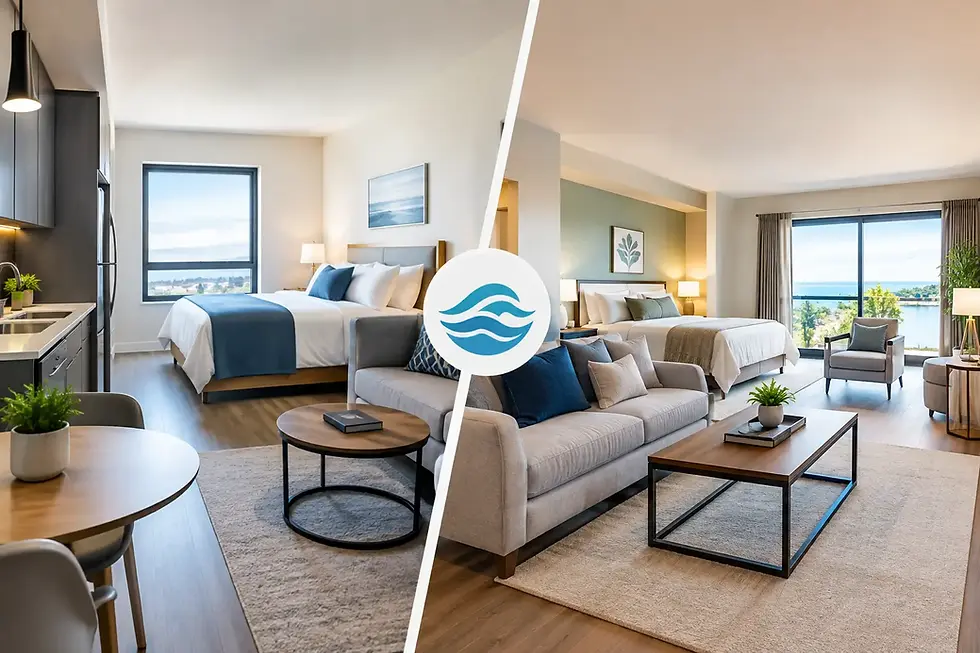
A surf apartment is more independent. You rent your own unit, handle your own schedule, and decide how structured you want the trip to be. That can mean cooking some meals, arranging lessons separately if you want them, and heading to the beach on your own timeline.
Neither option is automatically better. It depends on how you travel, how much support you want, and whether your priority is community or flexibility.
Who usually does better in a surf camp
Surf camps work well for first-timers, solo travelers who want built-in company, and anyone who prefers not to organize much. If you are new to surfing, there is real value in having lessons and guidance already built into the stay. You remove a lot of guesswork.
That same structure also helps if you are only visiting for a few days. On a short trip, it can be useful to have transport, coaching, and meals lined up so you spend less time figuring things out.
The trade-off is that surf camps tend to run on a shared schedule. Breakfast is at a certain time. Transport leaves at a certain time. Lessons happen when the camp organizes them. If the waves are better later, or if you want to skip the group vibe and just rest, that setup can start to feel limiting.
Who usually does better in a surf apartment
A surf apartment is often the better fit for independent surfers, couples, remote workers, and travelers staying more than a few nights. It gives you space to settle in and shape the trip around the conditions instead of around a program.
If you already know how to surf, or at least know how you like to learn, an apartment makes a lot of sense. You can paddle out early, go back for breakfast, check conditions again, and surf later without needing anyone else's plan to match yours.
It also tends to work better for people watching costs. With an apartment, you usually have more control over food spending and can choose when to pay for extras like lessons, board rentals, taxis, or outings.
Cost is not always what it looks like
A surf camp can seem like a good deal because a lot is bundled together. When you see lessons, meals, and lodging in one price, it feels straightforward. And sometimes it is. If you would use every included service, the total can be fair.
But bundled pricing also means you may pay for things you do not fully use. Maybe you skip half the group meals. Maybe you only want one lesson, not five. Maybe you would rather walk to the break than take transport. In those cases, the package stops being efficient.
A surf apartment usually separates the costs. At first glance, that can look less convenient, but it often gives better value for travelers who do not need a full package. You pay for the lodging, then decide what else matters. For budget-conscious surfers, that control can be a big advantage.
Privacy and rest matter more than people expect
Surf trips sound social in theory, but after a few long sessions, most people appreciate quiet. This is one of the biggest differences in the surf apartment vs surf camp decision.
Surf camps are usually more communal. Shared meals, shared common areas, and constant interaction are part of the experience. For some travelers, that is exactly the point. You meet people fast, swap stories, and maybe find surf partners for the next day.
For others, it gets tiring. If you are traveling as a couple, working remotely between sessions, or just like having a calm place to recover, an apartment is usually the better setup. Having your own kitchen, your own bathroom, and your own downtime can make the trip feel easier and more sustainable.
Flexibility is the real selling point of an apartment
Waves do not care about your itinerary. Wind changes. Swell shifts. Tides matter. That is why flexibility matters so much on a surf trip.
With a surf apartment, you can adapt. If dawn patrol looks good, go early. If the afternoon is cleaner, wait. If you want to take a lesson one day and free surf the next, no problem. You are not locked into a camp schedule.
This matters even more in places like Playa Encuentro, where people often plan the day around changing surf conditions. Staying nearby in a practical apartment setup can make it easier to surf when the window is right, not just when transport leaves.
Meals, routines, and how you actually travel
Food is one of those details that sounds minor until you are on the trip. Surf camps often include meals, which saves planning. That is useful if you want a hands-off stay.
Still, meal plans are not always ideal for every traveler. Some people want a quick coffee and fruit before an early paddle. Others want to eat out, cook simple food, or keep costs low. Apartments make that easier because you are not tied to a communal dining schedule.
The same goes for your overall routine. If your best trips are loose, active, and self-directed, a surf apartment usually matches that style better. If you like a built-in flow with fewer decisions, a surf camp may feel easier.
Social atmosphere: built-in group or choose-your-own
This is where personality matters. Surf camps create fast connections. If you are traveling solo and want to meet people quickly, that social structure can be a real benefit. There is usually someone around for a surf check, dinner, or a ride.
Apartments are more independent by nature, but that does not mean isolated. In a surf-focused area, you still meet people at the beach, in cafes, and around town. The difference is that the social side is optional. You can join in when you want and keep to yourself when you do not.
For many repeat surfers, that balance is better. They want access to the surf scene without living inside a group schedule the whole week.
When a surf apartment makes the most sense
A surf apartment is usually the stronger choice if you already surf, want to manage your own budget, or prefer privacy over programming. It also makes sense for longer stays, especially if you want a place that functions more like a base than a package.
That is why apartment-style lodging near the break works so well for a lot of Cabarete surf travelers. If your goal is simple, affordable accommodation close to Encuentro without paying for services you may not need, an option like Waverider Apartments fits that type of trip well.
When a surf camp is still the better move
A surf camp is probably the better option if you are brand new to surfing, nervous about logistics, or mainly booking the trip for the social experience. It is also a smart choice when you want lessons included and do not want to think much about planning.
There is no shame in choosing convenience. A good surf camp can remove a lot of friction, especially on your first trip.
The better question is not which option sounds cooler. It is which one matches the way you actually travel. If you want support, structure, and instant community, go with the camp. If you want freedom, value, and your own pace, the apartment is probably the better call.
Pick the stay that makes it easier for you to surf more, stress less, and enjoy the hours between sessions too.


Comments