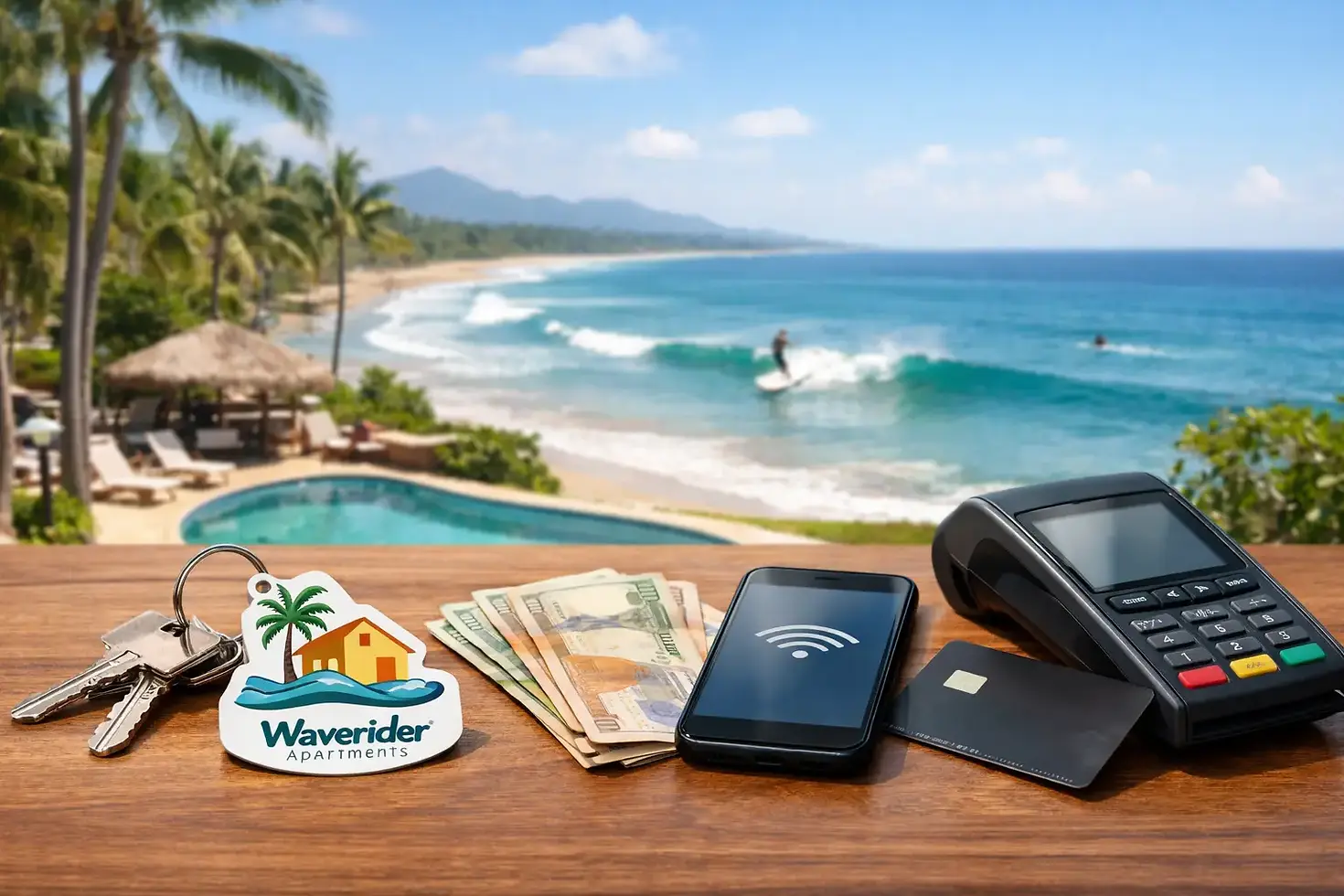
Top Rental Payment Methods for Cabarete Surf Trips
- Ralph Taylor

- Aug 30
- 6 min read
A good surf trip can start with a bad payment decision. The top rental payment methods are not just about what is convenient at checkout. They affect your exchange rate, your booking protection, how quickly a host can confirm your stay, and whether you arrive in Cabarete with enough cash left for food, transport, and surf sessions.
For apartment-style lodging, the best option usually depends on where you are booking from, how far ahead you are planning, and the payment options the property accepts. A traveler booking from the US or Canada may prioritize card protection. Someone already traveling through the Dominican Republic may find cash or a local transfer more practical. The key is to understand the trade-offs before sending a deposit.
Top Rental Payment Methods for Travelers
There is no single best way to pay for every rental. A payment method that works well for a last-minute weekend trip may be a poor fit for a month-long surf stay. These are the main options travelers are likely to encounter.
Credit cards
Credit cards are often the most familiar choice for international travelers. They can be fast, easy to track, and may offer purchase protection or travel-related benefits, depending on the card and issuer. For a guest booking an apartment from abroad, that paper trail can bring peace of mind.
The catch is cost. Some cards charge foreign transaction fees, commonly around 3 percent. A rental may also be processed in US dollars even when the local rate is based on Dominican pesos, which can create a less favorable conversion. Before you pay, check whether your card has foreign transaction fees and ask which currency will be charged.
Cards are a strong fit when you want a clear record of payment, are paying a deposit before arrival, or need to secure dates quickly. Use a card directly with the property only after you have confirmed the unit details, total price, and payment terms.
Debit cards
A debit card can work much like a credit card online, but it requires more caution. The money leaves your account immediately, and debit-card dispute protections can be more limited or slower than credit-card protections. If a payment is refundable, the return can also take time to appear in your account.
Debit cards make sense when they are your primary travel card or when you are making a smaller payment to a trusted, verified property. Avoid using one for a large advance payment unless you are comfortable with the cancellation and refund process. Keep enough balance in the account for the payment, but do not treat it as your only source of travel funds.
Bank transfers
Bank transfers are common for direct bookings, especially when the stay is longer or the property offers a lower rate for a direct arrangement. They are straightforward: the guest sends funds from one bank account to another, then shares the confirmation so the host can match the payment to the reservation.
Transfers can be economical in some cases, but they are not always fast. International wires may take several business days, and intermediary banks can deduct fees along the way. If the rental requires a specific amount to confirm a booking, ask whether the host needs to receive the full amount after all bank charges.
Use the exact account details supplied by the property, verify them through a known communication channel, and include your name and stay dates in the transfer reference if possible. A bank transfer is generally harder to reverse than a card transaction, so it is best for bookings where you have already confirmed the property, apartment, dates, and terms in writing.
Digital payment apps and online wallets
Digital wallets and payment apps can be useful because they are quick and familiar. They may allow payment by linked card or bank account, and they usually provide a digital record. For travelers and independent rental hosts, that speed can be useful when surf conditions look good and dates are disappearing.
Not every app is available in every country, and fees can vary by payment type, currency, and whether the transfer is personal or commercial. Some platforms also offer less protection when a payment is categorized as a personal transfer. Do not assume every payment sent through an app can be disputed the same way a credit-card charge can.
If using an online wallet, confirm the exact account name with the host and ask whether the amount quoted includes all processing costs. Take a screenshot or save the transaction confirmation. Small details matter when you are coordinating an arrival from another country.
Cash on arrival
Cash remains useful in the Dominican Republic, particularly for day-to-day spending. For rentals, it may be an option for a balance due at check-in or for a short, last-minute stay, but it is not always practical for the entire reservation.
Cash has a few advantages: there are no card processing fees, no transfer delays, and no dependence on a banking app or weak signal. The downsides are just as real. Carrying a large amount of cash while traveling is inconvenient, exchange rates can differ between providers, and cash does not create an automatic transaction record.
If you pay a rental balance in cash, ask for a written or digital receipt that shows the amount, currency, date, apartment, and remaining balance, if any. Count the payment together at the time it is handed over. This is simple and protects both the guest and the host.
How to Choose the Right Payment Method
Start with the timing of your trip. If you are booking weeks or months ahead, a credit card or documented online payment may be worth the extra fee because it provides a clear payment history. If you are already in the area and extending your stay after a few good days at Encuentro Beach, a local option or cash may be easier.
Then look at the total cost, not just the nightly rate. Ask whether the quoted amount is in US dollars, Dominican pesos, or another currency. Check for card fees, transfer fees, exchange-rate markups, and any cost charged by your bank. A method that appears cheaper can become more expensive once conversion and processing charges are added.
Finally, consider your comfort level with risk. A direct booking can offer personal communication and flexibility, especially with a small, independent property. It also means you should verify the essentials yourself. Confirm that you are speaking with the actual host or authorized contact, review the apartment information, and keep all payment messages in one place.
Questions to Ask Before You Send Money
Before paying a deposit or full balance, get the answers to a few practical questions. What is the total amount due, and in what currency? How much is required now, and when is the remaining balance due? Is there a payment deadline that holds your dates?
You should also understand the cancellation terms before money changes hands. Ask what happens if travel plans change, your flight is delayed, or the property cannot accommodate the confirmed reservation. The goal is not to expect a problem. It is to avoid guessing when plans shift.
For direct apartment stays, request confirmation that includes the property name, unit type, arrival and departure dates, guest name, payment amount, and amount still due. A short confirmation message with these details is more useful than a vague promise that your booking is "all set."
Avoid Payment Problems on a Surf Trip
Most payment issues come from assumptions. A guest assumes a deposit is refundable. A host assumes a transfer fee will be covered by the sender. Someone quotes a rate in one currency and charges in another. These mistakes are easy to prevent with one clear conversation before payment.
Be careful with unexpected changes to payment instructions, especially if you receive a new bank account or wallet address after you have already been communicating with a host. Verify the change through the original contact channel before sending anything. A quick WhatsApp message or email confirmation can prevent a costly error.
It also helps to separate your travel money. Keep one card or account for accommodation and larger reservations, and another source of funds for daily expenses. That way, a lost card, ATM issue, or temporary bank alert does not disrupt the rest of your trip.
For a simple stay near the waves, the right payment method should feel just as practical as the apartment itself. Confirm the full cost, save your receipt, and choose the option that gives you the right balance of convenience, fees, and confidence. Then you can spend less time sorting out transactions and more time checking the forecast for your next session.


Comments